





Ironically, it is often people who have served in the military and have experienced firsthand the banality and brutality of mindless obedience who come to question and then reject external authority over their own internal ethical decisions. (“Brian Willson and the Problem of Obedience” by Dana Visalli)
Heading into the Memorial Day weekend it seems appropriate to highlight a few of the antiwar, activist veterans who’ve been involved in war tax resistance and this network at one time or another. I hope that any more recent resister veterans will feel free to comment here or offer their story for the NWTRCC newsletter.
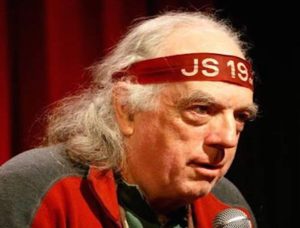
Brian Willson was in the Air Force from 1966-1970 and including active duty in Vietnam, an experience that left him horrified at the wanton killing of innocent civilians. After returning home he eventually found his way to Vietnam Veterans Against the War. At the time he lived in Western Massachusetts where he met Wally and Juanita Nelson. In a 2011 radio interview he said, “They had incredible courage to live outside the ‘American way of life.’ Their lives, in a sense, were a model of how to live simply and not cooperate with the nation-state….” After various interactions with the IRS, Brian shifted to living low income. Read a couple of his letters to the IRS here and here, his autobiography Blood on the Tracks, and watch the documentary, Paying the Price for Peace.
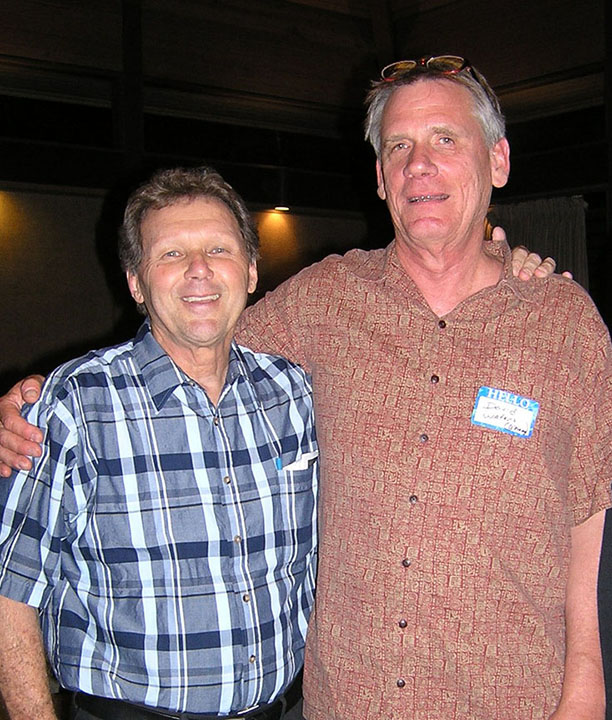
David (right) with Fr. Roy Bourgeois (2006 NWTRCC gathering).
David Waters, another Vietnam vet and an Alabama native, took a little longer to really get radicalized, but by the end of the first Gulf War he “quit cold,” thoroughly disgusted by the indiscriminate bombing campaign of Operation Desert Storm. “Anytime you’re about to make some kind of a statement or a stand or life-changing decision or something you think about weighing consequences and all that. And I thought, well, hell, I’d rather live in a hole in the street and eat what I could find rather than pay for this kind of thing anymore.” (2003 radio show @ 8 min.) He’s given many interviews, spoke on a panel at the 2000 international conference of war tax resisters and peace tax campaigns, been a member of Veterans for Peace, and traveled to Cuba with the humanitarian aid trips of Pastors for Peace.
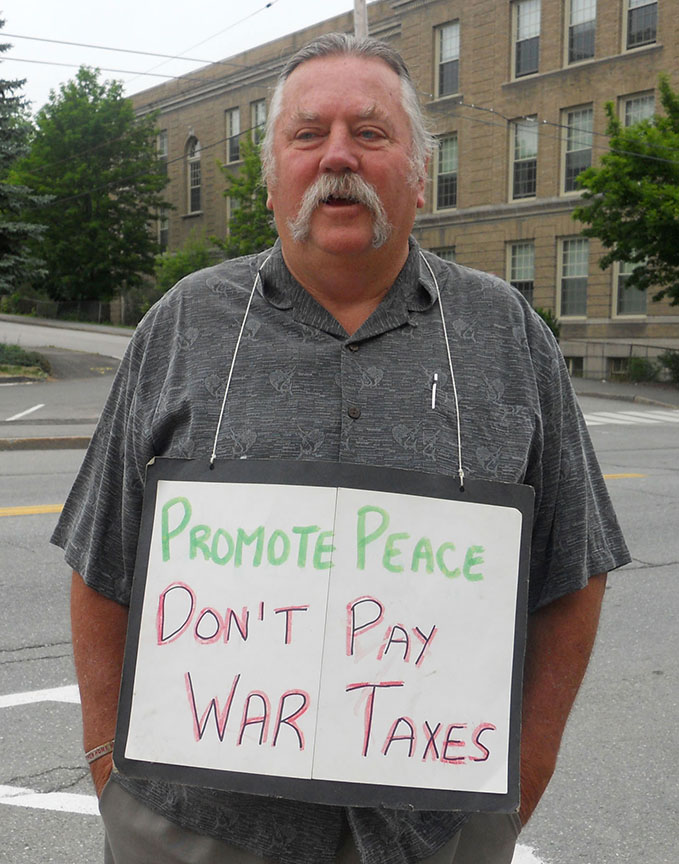
Photo by Patrick O’Neill at the time of Frank’s sentencing.
Frank Donnelly became an activist following a stint in the Army reserves in 1966. He was court-martialed and spent four months in a military stockade in 1971 for refusing to wear his uniform during the Vietnam War. A few decades later Frank found NWTRCC after running into trouble with the IRS over some unreported income (a method not encouraged by NWTRCC). He took a plea deal, and Maine resisters and activists rallied in his support at the sentencing. The judge handed down a year sentence, which Frank spent split between a federal prison camp in South Carolina and a halfway house in Maine. After his sentencing, Donnelly said he wished he had been more transparent in his war tax resistance, but the year in prison did not stop him from his antiwar activism and staying connected with NWTRCC.
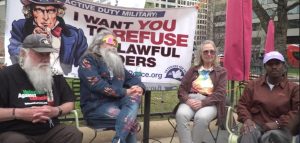
Al Glatkowski, Daniel Bariner, Ellen Barfield, and Kareem El who are sitting in front of a banner of a current Veterans for Peace campaign calling on active duty military to refuse unlawful orders. VFP on Facebook.
Ellen Barfield , who spent four years in US Army (1977-1981), can be found in a “Rocking Chair Rebellion” against banks that finance fossil fuels, risking arrest on the Capitol Steps holding a “Benefits Not Bullshit” banner, or getting dragged out of a Congressional hearing while protesting U.S. weapons to Israel. As a longtime telephone tax resister (that federal excise tax on local landlines that pays into the general fund and has a historic connection to war taxes) she has spent a good number of hours fighting with Verizon to honor her refusal to pay that tax. She’s on the board of Veterans for Peace, War Resisters League, Military Families Speak Out, and more.
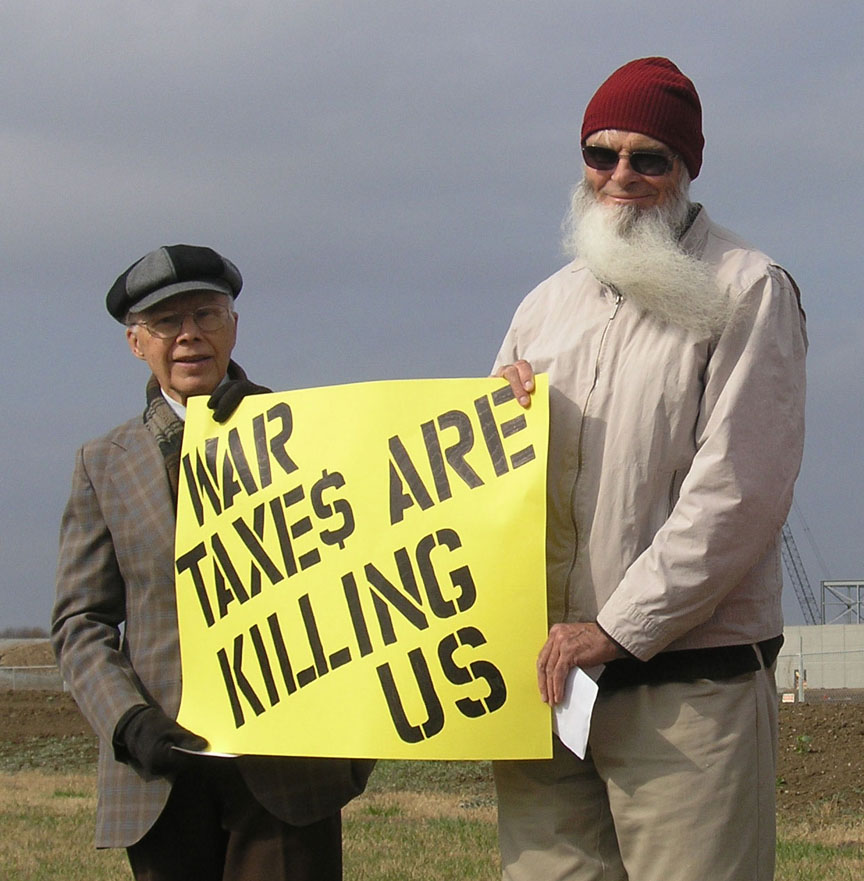
Peter Smith (right) with Don Kaufman outside Kansas City (Nuke) Plant, 2011.
Peter Smith enlisted in Navy ROTC during college and spent four years in the Navy before returning to college in 1964. Through a Catholic activist group he found himself in a civil rights march in Montgomery, Alabama, led by Martin Luther King Jr. that began his shift to peace and justice work. Later hearing Dr. King speak out against the Vietnam War was life-changing. “His message of non-violence rooted in Christian principles, his courage to stand up for what he believed in when the odds seemed insurmountable, motivated me to dedicate my life to nonviolent struggle against racism and other forms of injustice.” Peter has been active with NWTRCC for many years and helps maintain the War Tax Resisters Penalty Fund.
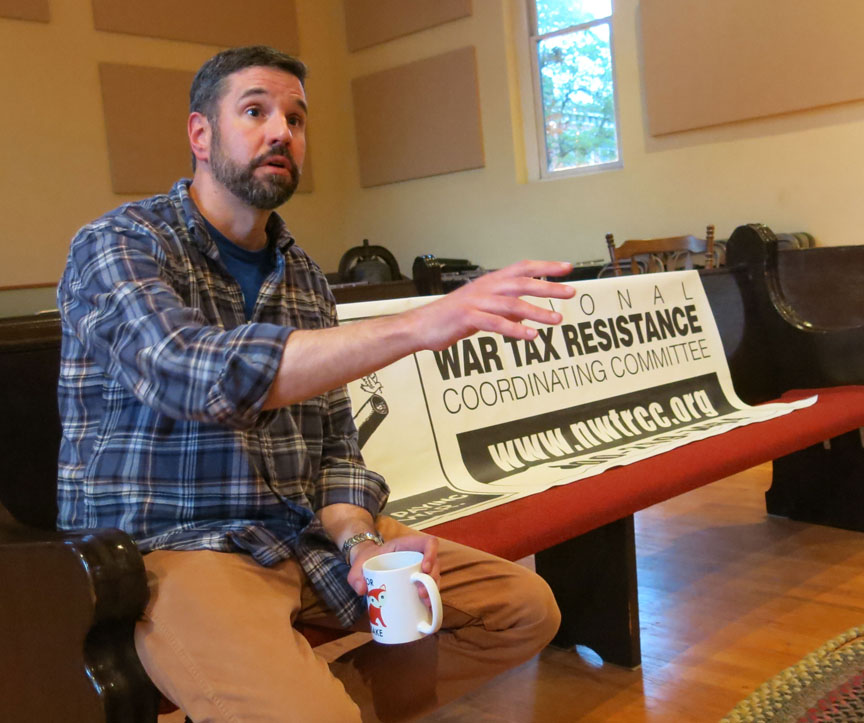
Matthew Hoh at NWTRCC gathering, 2017.
As a Marine Matthew Hoh participated in the U.S. occupation of Iraq from 2004-2007 and then was posted to Afghanistan with the State Department. In 2009, he resigned publicly in protest over the escalation of the war. In 2015 he announced his refusal to pay taxes for war, and in a profile for NWTRCC he wrote: “My participation in these wars has left me with moral injury, a condition that is, thankfully, becoming better understood in the veterans and medical communities.” He spoke at NWTRCC’s 2017 gathering in St. Louis, where we were also joined by national staff members of Veterans for Peace, which is based in St. Louis. Matthew is not active in the WTR network now, but he’s on the advisory boards of Veterans for Peace and World Beyond War, and you can keep up with him online at “Matt’s Thoughts on War and Peace”.
So, a big thanks to all the veterans who are speaking and acting publicly against war and militarism, and a big big thanks to all the active military people who find that they can no longer participate in that system and find their way out (Center on Conscience and War can help).
And, I will end this rather long blog with an additional tribute to those WWII resisters who helped launch the modern war tax resistance movement, the Vietnam era draft resisters who gave it a big boost, and all resisters who have joined in along the way.
—Post by Ruth Benn
Thank you Ruth! This post is so timely, and I always appreciate learning more about resisters in our network!
Ruth’s last paragraph reminds me to add: Lewis Hill, a CO during WWII, who spent time in a conscientious objector work camp during the war, is the one who began Pacifica Radio. Hill was also a journalist, who’d been fired from his job for refusing to misrepresent the facts.
After the war, he was inspired to begin a radio station–entirely funded by the listening public, no advertisers or corporate funding. FM radio was just beginning, and Hill offered FM radios to those who donated and needed such to listen to this new station, KPFA in Berkeley. Thus began the network, April 15, 1949! (such a date to go on the air!) Pacifica network now includes KPFK in Los Angeles, WBAI in NYC, WPFW in D.C, and KPFT in Houston. See more details of Pacifica’s history and unique stories it’s covered over its 75k+ years. https://pacifica.org/about_history.php